
Sports equipment manufacturing influences how athletes train, compete, and perform across different sports.
From footballs and protective helmets to tennis rackets and fitness machines, every product must meet practical requirements for durability, usability, and consistent performance.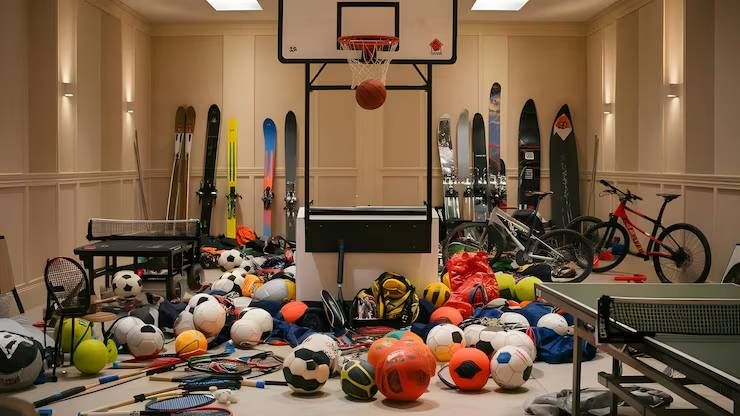
Manufacturers must balance material selection, product design, production efficiency, and quality control. Equipment designed for professional competition may require different specifications from products intended for schools, recreational users, or home fitness environments.
Understanding these manufacturing processes helps buyers, distributors, sports organizations, and equipment businesses evaluate product quality more effectively. It also reveals how production technologies, material choices, testing procedures, and supplier capabilities contribute to dependable sporting products.
How Material Selection Influences Sports Equipment Quality
Materials determine many of the characteristics that define sports equipment, including strength, weight, flexibility, comfort, and resistance to wear. Manufacturers select materials according to the forces, environmental conditions, and performance requirements each product must withstand.
Carbon fiber composites are used in certain high-performance rackets, bicycle components, and other sporting products because they can provide high stiffness with relatively low weight. Aluminum alloys are common in bicycle frames and selected equipment structures, while engineered plastics and rubber compounds support applications requiring impact resistance, flexibility, or weather tolerance.
Textiles also play an important role. Polyester fabrics, reinforced stitching, moisture-managing materials, and specialized coatings can influence the durability and comfort of sportswear, footwear, and protective equipment.
No material is universally superior. Carbon fiber, for example, can offer excellent stiffness-to-weight characteristics but may be more vulnerable to particular impact damage than some alternative constructions. The appropriate choice depends on product design, manufacturing quality, intended use, and required testing.
Manufacturing Processes That Shape Product Performance
The manufacturing method affects dimensional consistency, structural integrity, surface finish, and production repeatability. Selecting the right process helps manufacturers meet technical requirements while controlling defects and material waste.
Molding, Forming, and Composite Manufacturing
Injection molding is widely used for producing plastic components such as protective shells, handles, fittings, and equipment housings. It supports repeatable production of complex shapes, provided that tooling, material conditions, and process parameters are properly controlled.
Metal forming, machining, and extrusion serve different applications. These methods can produce structural components, frames, fasteners, and other parts that require specific dimensions or mechanical properties.
Composite manufacturing involves combining reinforcing fibers with a resin matrix. Depending on the product, processes may include compression molding, resin transfer molding, or other controlled layup and curing methods. Fiber orientation, resin distribution, and curing conditions can significantly influence the finished component's performance.
Assembly and Finishing
Many sporting products combine several materials and manufactured components. A bicycle, for instance, includes structural parts, bearings, braking systems, fasteners, and other components that must work together reliably.
Assembly accuracy affects fit, alignment, movement, and safety. Finishing operations, including coating, surface treatment, polishing, and protective sealing, can improve appearance and help resist corrosion or environmental exposure when appropriately specified.
Manufacturers must ensure that these finishing processes do not compromise critical dimensions, material properties, or component compatibility.
Quality Control and Safety Testing
Quality control should begin with incoming materials and continue throughout production rather than being limited to final inspection. Early checks help identify unsuitable materials, inconsistent dimensions, and manufacturing problems before they affect large batches.
Manufacturers may use dimensional measurement, visual inspection, hardness testing, tensile testing, impact testing, and fatigue testing, depending on the product. Equipment exposed to repeated loads often requires testing that evaluates performance over multiple cycles rather than under a single load.
Safety requirements vary by product category and intended use. Protective helmets, for example, may be subject to specific impact-performance standards, while climbing equipment and other load-bearing products require testing appropriate to their intended applications.
Relevant standards may come from organizations such as ASTM International, ISO, or sport-specific governing bodies. The applicable requirements depend on the product, jurisdiction, and intended market. Manufacturers should verify the current standard and applicable certification requirements instead of assuming one testing protocol covers every product.
Traceability is another important consideration. Recording material batches, production parameters, inspection results, and corrective actions can help manufacturers investigate defects and maintain consistent output.
Choosing Sports Equipment Manufacturing Suppliers
For businesses sourcing equipment, supplier evaluation should extend beyond product appearance and quoted specifications. Manufacturing capability, quality systems, production capacity, and communication practices can affect the reliability of ongoing supply.
A useful evaluation considers whether the supplier can demonstrate:
Material specifications and traceability appropriate to the product.
Documented inspection and testing procedures.
Consistent production tolerances and repeatable manufacturing processes.
Relevant certifications or independent test reports where required.
Capacity to handle expected order volumes and product variations.
Clear procedures for handling defects, corrective actions, and product changes.
Buyers should also assess whether samples accurately represent normal production. A carefully prepared prototype does not necessarily demonstrate that a supplier can maintain the same quality across thousands of units.
For custom equipment, design ownership, tooling responsibilities, intellectual property arrangements, and change-control procedures should be clarified before production begins. These details become particularly important when products require specialized molds, composite structures, or customized performance characteristics.
Production Technology and Manufacturing Efficiency
Modern manufacturing facilities increasingly use digital design tools, automated machinery, and production-monitoring systems to improve consistency and reduce avoidable waste.
Computer-aided design (CAD) helps engineers develop product geometry and evaluate design changes before physical production. Computer-aided manufacturing (CAM) translates digital designs into manufacturing instructions for compatible equipment, including certain CNC machining systems.
Automation can improve repeatability in tasks such as cutting, assembly, material handling, and inspection. However, its value depends on production volume, product complexity, setup requirements, and the cost of maintaining the equipment.
Manufacturers can also use statistical process control to monitor production variation and identify changes before they generate excessive defects. Data collected from inspection stations and manufacturing equipment can help teams investigate recurring problems and improve process stability.
Digital tools are most effective when combined with sound engineering practices and trained personnel. Automating an unstable process may simply produce defects more quickly, so process validation remains essential.
Balancing Performance, Durability, and Sustainability
Improving sports equipment performance involves balancing competing requirements. A lighter product may improve handling or reduce fatigue, but excessive weight reduction can compromise strength or durability if the design is not properly engineered.
Manufacturers must also consider how equipment performs under real operating conditions. Temperature changes, moisture, ultraviolet exposure, repeated impacts, and abrasive surfaces can affect material behavior over time.
Sustainability introduces additional design considerations. Material efficiency, manufacturing scrap reduction, repairability, component replacement, and product lifespan can influence a product's overall environmental footprint.
Recycled materials may be suitable for some components, but their properties and consistency must be verified for the intended application. In safety-critical equipment, material substitutions must not bypass required performance testing or certification.
A durable product that remains functional longer may reduce replacement frequency, although the overall environmental impact depends on materials, production methods, transportation, use, and end-of-life handling.
Frequently Asked Questions
What determines the quality of sports equipment?
Quality depends on material suitability, design, manufacturing consistency, assembly accuracy, and appropriate performance and safety testing. No single factor can compensate for major weaknesses in the others.
Which materials are commonly used in sports equipment manufacturing?
Common materials include metals, engineered plastics, rubber, technical textiles, and fiber-reinforced composites. The choice depends on required strength, weight, flexibility, impact resistance, comfort, and environmental conditions.
How do manufacturers test sports equipment durability?
Testing may include repeated-load fatigue tests, impact assessments, abrasion tests, dimensional inspections, and environmental exposure testing. The appropriate method depends on the equipment's intended use and applicable standards.
What should businesses evaluate when selecting a sports equipment manufacturer?
Businesses should assess manufacturing capabilities, material traceability, quality-control procedures, testing documentation, production capacity, and defect-handling processes. Product samples should also be representative of normal manufacturing output.
Can automated manufacturing improve sports equipment quality?
Automation can improve repeatability and reduce certain production errors when processes are properly designed and maintained. It does not eliminate the need for skilled engineering, process monitoring, and independent quality checks.
Conclusion
High-quality sports equipment depends on the relationship between material selection, engineering design, manufacturing processes, and systematic quality control. Improvements in any one area must be evaluated against the product's overall performance, durability, and safety requirements.
For manufacturers and equipment buyers, the most reliable approach is to prioritize documented production capability, appropriate testing, and consistent specifications. These fundamentals support dependable sporting products while helping businesses make better-informed manufacturing and sourcing decisions.