Industrial processes often depend on fluids that must remain clean, stable, and suitable for continuous operation.
Hydraulic oil, lubricants, process water, coolants, chemicals, and other industrial fluids can accumulate particles or contaminants that affect equipment performance and product quality.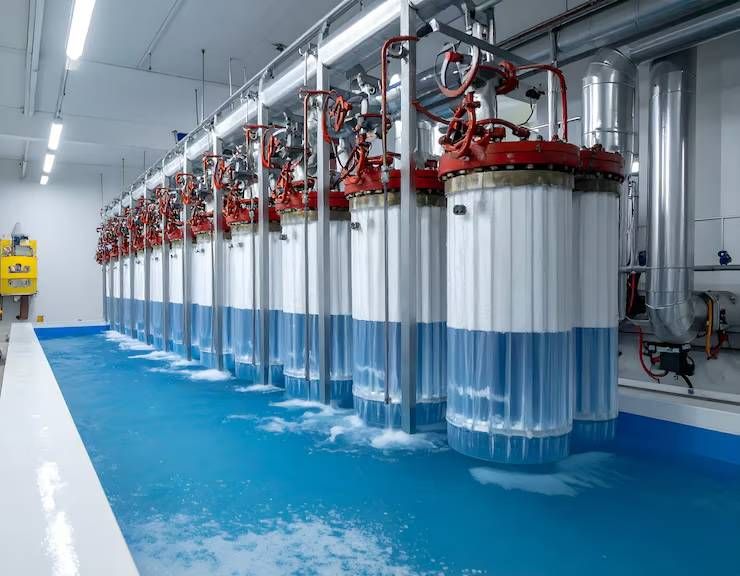
Industrial fluid filtration systems are designed to remove unwanted materials from these fluids while allowing the process to continue efficiently. Modern systems combine filtration media, pressure control, monitoring equipment, and automated maintenance features to handle different contamination levels and operating conditions.
Understanding how these systems work requires looking beyond the filter element itself. Filter selection, flow characteristics, contamination type, pressure drop, system design, and maintenance practices all influence how effectively a filtration system performs.
Why Fluid Filtration Matters in Industrial Operations
Industrial fluids rarely remain perfectly clean during extended operation. Particles can enter through raw materials, equipment wear, environmental exposure, maintenance activities, or chemical reactions within the process.
If these contaminants circulate through sensitive machinery, they can accelerate component wear, restrict narrow passages, interfere with valves, and reduce the reliability of pumps and other equipment. In process industries, contamination can also affect the quality or consistency of the finished product.
Filtration provides a controlled method for separating unwanted materials from the fluid stream. The appropriate system depends on what needs to be removed and how the fluid behaves during processing.
For example, a hydraulic system may prioritize fine particle removal to protect precision components, while an industrial water system may require filtration designed around suspended solids and other specific contaminants.
How an Industrial Filtration System Works
A typical filtration system directs contaminated fluid through a filtration medium that captures or separates unwanted material. The cleaned fluid then continues toward the next stage of the process or returns to the operating system.
The basic principle is simple, but industrial applications can be much more complex. Filtration systems may include multiple stages, pumps, valves, pressure gauges, sensors, housings, automatic controls, and filtration elements with different separation characteristics.
The system must also accommodate the required flow rate. A filter that provides excellent particle removal but cannot handle the required fluid volume may create excessive pressure loss or disrupt production.
This is why filtration performance cannot be evaluated independently from the rest of the process.
Choosing Filtration Technology for the Contaminant
Different contaminants require different separation approaches. Solid particles are commonly handled using depth or surface filtration, while other technologies may be needed when the fluid contains oils, emulsions, microorganisms, dissolved substances, or very fine particles.
Common industrial approaches include:
- Cartridge filtration for controlled particle removal and relatively compact systems.
- Bag filtration for applications requiring practical handling of higher contaminant loads.
- Automatic self-cleaning filtration for processes that need continuous operation with reduced manual intervention.
- Membrane filtration for applications requiring fine separation or selective removal.
- Centrifugal separation for removing certain suspended solids without relying solely on disposable filter media.
- Coalescing filtration for separating dispersed liquid droplets or aerosols from another fluid stream.
The choice depends on particle characteristics, fluid viscosity, operating temperature, pressure, required cleanliness, and the desired level of separation.
Understanding Filter Media and Separation Performance
Filter media are engineered to capture contaminants through specific physical mechanisms. The construction of the medium affects particle retention, flow resistance, capacity, and service life.
Surface filtration primarily captures particles at or near the surface of the medium. Depth filtration allows contaminants to become trapped within the structure of the material.
Neither approach is universally superior. The appropriate design depends on the application and contamination profile.
Filtration performance is also influenced by particle size distribution. A system designed to remove relatively large particles may not provide the same level of control over much smaller contaminants.
For demanding applications, manufacturers may specify filtration ratings and test methods to describe separation performance. These specifications should be interpreted within the context of the actual operating conditions rather than treated as isolated numbers.
Pressure Drop and Flow Rate Are Critical
One of the most important operating considerations is pressure drop across the filter. As contaminants accumulate, resistance to fluid flow can increase.
A new filter may allow fluid to pass with relatively low resistance. As the filtration medium loads with contaminants, the pressure difference between the inlet and outlet can rise.
Excessive pressure drop can reduce system efficiency and may indicate that the filter requires cleaning or replacement. Industrial systems therefore often use differential-pressure indicators or sensors to identify changes in filter condition.
Flow rate must also be considered during system design. A filtration unit needs enough capacity to handle the required process flow without creating unacceptable pressure losses.
This makes filtration sizing a system-engineering task rather than simply a matter of selecting a filter with a particular nominal rating.
Where Modern Filtration Systems Are Used
Industrial fluid filtration is used across a wide range of manufacturing and processing environments.
In hydraulic equipment, filtration helps control particles that can damage pumps, valves, actuators, and other precision components. Lubrication systems similarly depend on contamination control to protect moving machinery.
Process industries may filter water, chemicals, solvents, coatings, oils, and other production fluids. Food and beverage operations have additional hygiene and material-compatibility requirements, while pharmaceutical applications can demand highly controlled filtration processes.
Metalworking operations also use filtration to manage machining fluids and coolants. Removing chips, fine particles, and other contaminants can help maintain fluid performance and reduce unwanted buildup in processing equipment.
Because each application has different operating conditions, filtration equipment is normally selected around the process rather than applied as a universal configuration.
Automation Is Changing Filter Maintenance
Modern filtration systems increasingly incorporate sensors and automated controls to reduce the need for constant manual inspection.
Differential-pressure monitoring can identify increasing resistance across a filter. Automated backwashing or self-cleaning mechanisms can remove accumulated material from certain filter designs without requiring the entire process to stop.
Some systems can also integrate filtration data with plant monitoring platforms. Operators can use this information to track operating conditions, identify abnormal behavior, and schedule maintenance based on actual system performance.
This approach supports condition-based maintenance. Instead of relying only on fixed replacement intervals, maintenance decisions can consider pressure changes, operating hours, fluid conditions, and contaminant loading.
Designing a Filtration System for Real Operating Conditions
A filtration system needs to match the actual characteristics of the fluid and the equipment it serves.
Important design considerations can include:
- Fluid type and viscosity
- Operating temperature
- Required flow rate
- System pressure
- Contaminant type and concentration
- Required cleanliness level
- Filter loading capacity
- Available installation space
- Cleaning or replacement requirements
- Compatibility with surrounding equipment
Fluid viscosity is particularly important because thicker fluids can create greater resistance to flow. Temperature can also change viscosity and influence how a filtration system behaves.
A well-designed system therefore considers both normal operating conditions and expected changes during startup, shutdown, temperature variation, and contamination loading.
Maintenance Keeps Filtration Performance Stable
Even a well-designed filtration system requires appropriate maintenance. A clogged element, damaged housing seal, incorrect replacement component, or neglected monitoring system can reduce filtration effectiveness.
Maintenance practices vary according to equipment type, but operators commonly monitor pressure differential, inspect components, check seals, and replace or clean filtration elements according to established procedures.
Filter changes should also be handled carefully. Introducing contaminants during maintenance can undermine the purpose of the filtration system itself.
For critical industrial processes, maintenance records can help identify recurring contamination problems and determine whether the issue originates within the fluid, equipment, environment, or filtration system.
Improving Efficiency Through Better Filtration Design
Modern filtration is increasingly focused on balancing cleanliness with operational efficiency. Excessive filtration resistance can increase energy requirements, while insufficient filtration can expose equipment to damaging contaminants.
The objective is therefore not simply to use the finest possible filter. The system should provide the required level of contamination control while maintaining suitable flow and operating characteristics.
Multi-stage filtration can sometimes improve this balance. A preliminary stage may remove larger contaminants before a finer downstream filter handles smaller particles. This can reduce the contaminant burden placed on the more precise filtration stage.
Proper system design can also extend filter service intervals and reduce unnecessary maintenance without compromising fluid cleanliness.
Frequently Asked Questions
What is an industrial fluid filtration system?
It is a system designed to remove unwanted contaminants from industrial fluids such as hydraulic oils, lubricants, process water, coolants, and chemicals.
How do I choose the right industrial filter?
Selection depends on the fluid, contaminant type, particle size, flow rate, pressure, temperature, required cleanliness, and acceptable pressure drop. The filter should be selected as part of the complete process system.
Why does pressure drop increase across a filter?
As contaminants accumulate within the filtration medium, resistance to fluid flow generally increases. Monitoring differential pressure can help identify when cleaning or replacement may be required.
Are automatic filtration systems better than manual filters?
Not necessarily. Automatic systems can be valuable for continuous processes or high contaminant loads, while simpler filtration may be appropriate for less demanding applications. The correct choice depends on process requirements.
How often should industrial filters be replaced?
There is no universal replacement interval. Filter condition, pressure differential, contamination levels, operating hours, and manufacturer recommendations should be considered when establishing a maintenance schedule.
Conclusion
Industrial fluid filtration systems are an important part of maintaining reliable equipment and controlled process conditions. Their effectiveness depends on more than the filtration medium itself; flow rate, pressure, contaminant characteristics, fluid properties, monitoring, and maintenance all contribute to performance.
Modern technologies are making filtration more adaptable through self-cleaning mechanisms, improved media, sensors, and condition-based maintenance. When these technologies are matched correctly to the process, filtration can provide consistent contamination control while supporting efficient and dependable industrial operation.