Vietnam is a country where mountains, coastlines, rice terraces, forests, and historic towns can appear within a single day's ride. For tourists, traveling by motorbike offers a closer connection to these changing landscapes, particularly on routes where the journey itself is as memorable as the destination.
Vietnam's most scenic motorbike routes range from demanding mountain roads in the north to relaxed coastal journeys through central Vietnam. The experience varies considerably by region, with differences in road conditions, traffic, weather, elevation, and riding difficulty.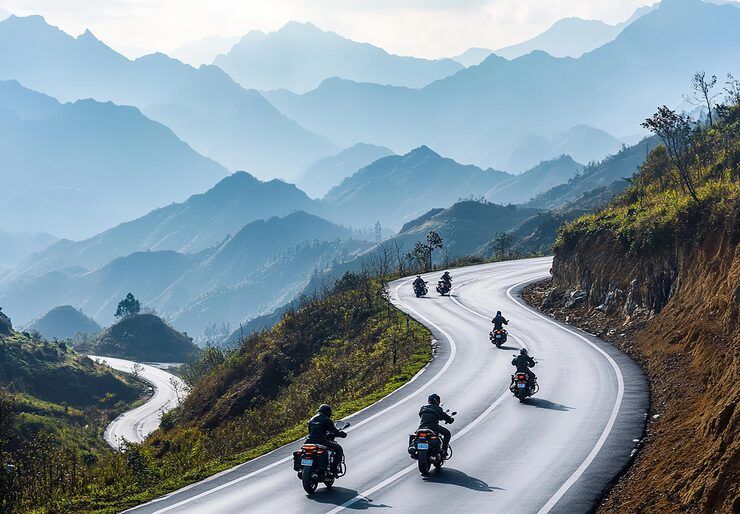
Choosing a route based on riding experience, available time, and preferred scenery can make the journey far more enjoyable. The Ha Giang Loop, Hai Van Pass, northern mountain roads, and central coastal routes each provide a different perspective on Vietnam.
Ha Giang Loop: Mountain Roads and Limestone Landscapes
The Ha Giang Loop is one of Vietnam's most distinctive motorbike journeys. Located in the far north, the route passes through mountainous areas associated with Quan Ba, Yen Minh, Dong Van, and Meo Vac.
The landscape changes rapidly as the road climbs through limestone mountains, narrow valleys, terraced farmland, and high passes. Sharp bends and steep sections make this a route where careful riding matters as much as sightseeing.
One of the major highlights is the Ma Pi Leng Pass. The road follows dramatic mountain terrain above the Nho Que River, creating expansive views across deep valleys and rugged peaks. The surrounding Dong Van Karst Plateau is also recognized as a UNESCO Global Geopark.
A typical loop can take several days, allowing travelers to combine riding with village visits, local markets, viewpoints, and overnight stays in smaller communities. Rather than rushing between destinations, allowing additional time for stops is particularly worthwhile here.
The Ha Giang region can be visually different throughout the year. Spring brings flowering landscapes, summer can reveal reflective rice terraces, while autumn provides cooler conditions and changing agricultural scenery.
Hai Van Pass: A Classic Coastal Mountain Ride
For travelers looking for a shorter scenic journey, the road between Hoi An and Hue provides an excellent combination of coastline, mountains, lagoons, and cultural attractions.
The centerpiece is Hai Van Pass, a mountain road running between Da Nang and Hue. Its position between the mountains and sea creates a distinctive riding experience, with sweeping coastal views appearing around many bends.
The pass itself is relatively short, so it can be incorporated into a longer day trip. Travelers starting around Hoi An can combine the ride with stops around Da Nang, the Marble Mountains, Son Tra Peninsula, Lang Co, and nearby lagoons.
After descending from the pass, the landscape changes again. Lang Co and the surrounding coastal areas provide a contrast to the forested mountain roads, while routes toward Hue pass through quieter stretches of countryside.
This journey is particularly suitable for travelers who want scenic riding without committing to a multi-day mountain expedition.
Northern Vietnam’s Mountain Roads
Beyond the main Ha Giang Loop, northern Vietnam contains numerous mountain routes where the scenery changes between valleys, forests, farmland, and highland settlements.
The northern provinces are characterized by rugged terrain and communities with diverse cultural traditions. Roads can become narrower and more challenging away from major towns, making route planning especially important.
For experienced riders, extending a northern journey toward areas such as Cao Bang can provide another perspective on Vietnam's mountainous landscape. The region is known for dramatic valleys, limestone formations, waterfalls, and rural scenery.
The attraction of northern mountain riding is not necessarily one individual landmark. Instead, it comes from the continuous change in scenery. A relatively short ride can move from a populated valley into forested hills and then into exposed mountain terrain.
Travelers should avoid treating these roads like ordinary highways. Weather can affect visibility and road surfaces, while construction, livestock, pedestrians, and unexpected bends require constant attention.
Hoi An to Hue: A Journey Beyond the Pass
The Hoi An to Hue route is more than a ride across Hai Van Pass. It can become a full-day journey combining historic sites, beaches, lagoons, mountain roads, and rural communities.
Starting around Hoi An provides opportunities to experience the quieter roads outside the central tourist areas before reaching Da Nang. From there, riders can continue toward Hai Van Pass and descend toward Lang Co.
The journey can then continue through coastal and lagoon landscapes toward Hue. Tam Giang Lagoon provides another visual change, with water, fishing areas, villages, and narrow roads creating a slower-paced section of the journey.
This route demonstrates why motorbike travel can be particularly rewarding in Vietnam. A conventional transfer between two cities focuses on getting from one place to another, while a motorcycle journey allows travelers to experience the landscapes between them.
Central Highlands Routes for a Different Landscape
Vietnam's Central Highlands offer another style of motorcycle travel. Instead of the dramatic limestone scenery found in northern Vietnam, riders encounter coffee-growing areas, forests, rolling hills, waterfalls, and elevated countryside.
Routes around Da Lat and the surrounding highlands can be especially appealing to travelers who prefer cooler weather and winding roads. The elevation creates a noticeable difference from Vietnam's coastal cities.
The roads through the highlands can also connect smaller communities and agricultural areas that are less concentrated with tourists. This makes the journey feel more rural, although riders should still expect changing road conditions and local traffic.
A highland route is particularly interesting when the objective is not simply to reach a famous attraction. The scenery between towns becomes part of the experience, with farms, hills, roadside markets, and forested sections appearing along the way.
What Makes a Vietnamese Motorbike Route Scenic?
Scenery is not determined only by dramatic mountain viewpoints. A memorable route usually combines several types of landscape and allows enough time to appreciate them.
Vietnam's scenic motorcycle roads often include:
- Mountain passes with elevated viewpoints
- Rice terraces and agricultural valleys
- Limestone cliffs and karst formations
- Coastal roads and beaches
- Forested hills and waterfalls
- Rivers, lagoons, and rural waterways
- Traditional villages and local markets
The cultural environment is equally significant. Northern mountain routes, for example, pass through communities with distinct local traditions, architecture, clothing, food, and agricultural practices.
For tourists, this combination of natural and cultural scenery is one of the strongest reasons to travel by motorbike rather than simply visiting individual destinations.
Planning a Safer Motorbike Journey
Scenic routes can also be demanding. Some roads include tight curves, steep gradients, limited visibility, heavy local traffic, or changing surfaces. Mountain weather can shift quickly, particularly at higher elevations.
Riders should choose a motorcycle that matches their experience and the route rather than selecting a vehicle based solely on appearance or engine size. Basic mechanical checks are also worthwhile before leaving a town.
A practical preparation list includes:
- Checking brakes, tires, lights, mirrors, and fuel
- Carrying suitable protective equipment
- Keeping navigation available offline
- Checking weather conditions before mountain rides
- Planning accommodation before reaching remote areas
- Allowing extra time for unexpected road delays
- Riding during daylight whenever possible
International visitors should also verify Vietnam's current licensing and documentation requirements before riding. Motorcycle regulations can depend on the vehicle category, license held, and applicable international documentation, so assumptions based on another country can create problems.
Choosing a Route Based on Your Travel Style
The right route depends heavily on what you want from the journey.
The Ha Giang Loop suits travelers interested in dramatic mountains, high passes, rural communities, and multi-day adventure. It demands more attention and riding confidence than a relaxed coastal journey.
The Hai Van Pass and Hoi An–Hue route works well for travelers who want mountain and coastal scenery within a shorter itinerary. It can also be combined with major cultural attractions.
The northern mountain routes around Cao Bang and surrounding areas appeal to riders who want remote landscapes, waterfalls, valleys, and less predictable road journeys.
The Central Highlands provide a different atmosphere, combining elevated terrain, forests, agricultural landscapes, and cooler mountain environments.
There is no single route that represents all of Vietnam. Each region provides a different combination of terrain, culture, climate, and riding conditions.
Frequently Asked Questions
What is the most scenic motorbike route in Vietnam?
The Ha Giang Loop is widely recognized for its dramatic mountain scenery, winding passes, limestone landscapes, and views around the Nho Que River. Its challenging roads also make it more demanding than many coastal routes.
Is the Ha Giang Loop suitable for inexperienced riders?
It can be challenging for inexperienced riders because of steep terrain, sharp curves, traffic, and changing road conditions. Riders should realistically assess their ability before attempting the route independently.
How long should a scenic Vietnam motorbike trip take?
The duration depends on the route. A Hai Van Pass journey can fit into a day, while the Ha Giang Loop is better experienced over several days. Additional time allows travelers to stop without rushing.
What should tourists check before riding in Vietnam?
Tourists should check current motorcycle licensing requirements, documentation, insurance arrangements, road conditions, weather, and local traffic regulations before starting a journey.
Conclusion
Vietnam's most scenic motorbike routes offer much more than transportation between destinations. From the towering limestone mountains of Ha Giang to the coastal curves of Hai Van Pass and the quieter landscapes of the Central Highlands, each route presents a different side of the country.
The best experience comes from matching the journey to your riding ability and allowing enough time for the landscape to unfold naturally. Careful preparation, appropriate documentation, sensible riding, and respect for local communities can turn a motorcycle trip into a meaningful way to experience Vietnam.